

demetrious.co
Three free Claude skillsa demetrious.co suite

SIGNAL.

Kill the noise in knowledge work.
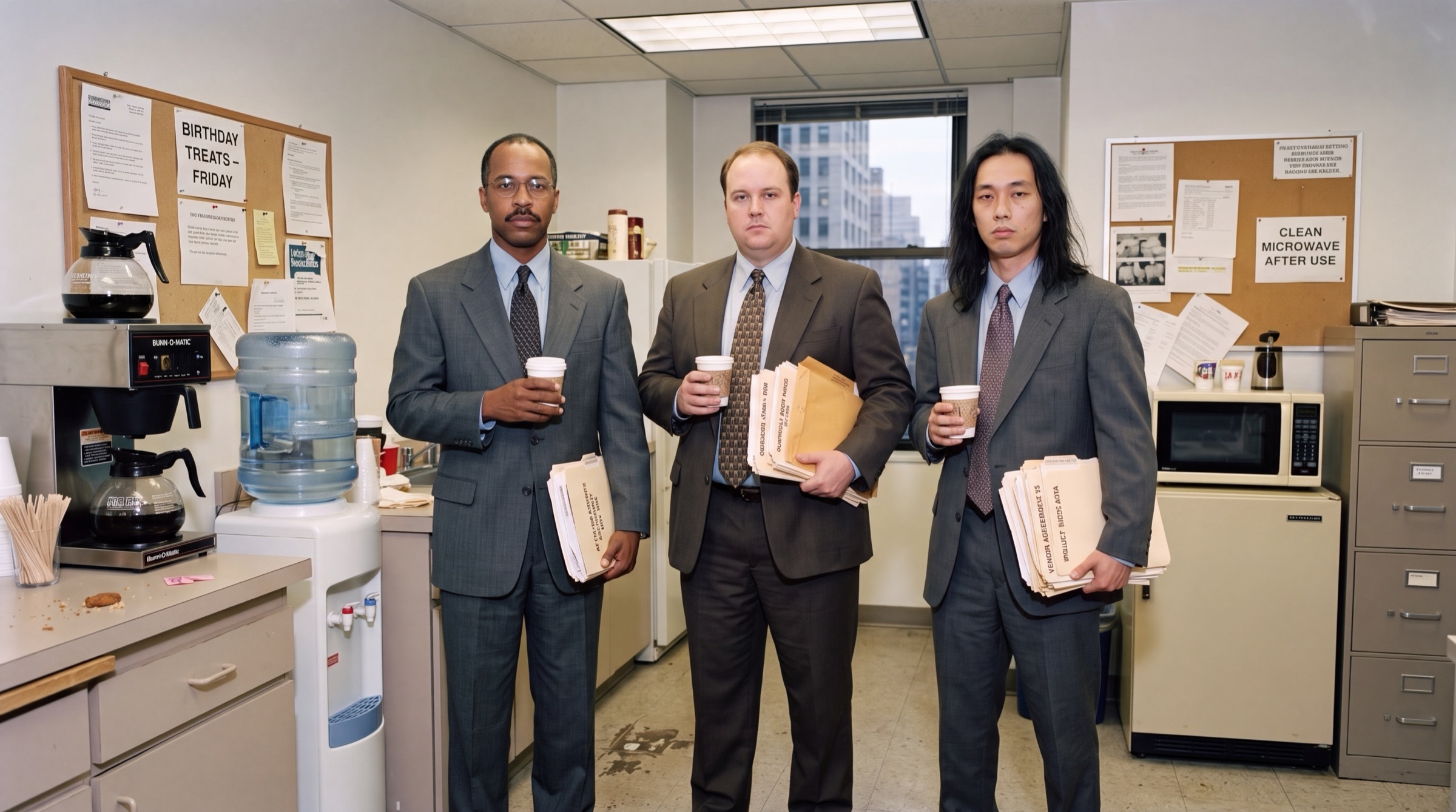
Three office workers with coffee and stacks of paperwork - the noise of knowledge work.

Three free Claude skills that kill the noise in knowledge work.

One for what you send. One for what you receive. One for when it's already a mess.

↑ Where noise wins — and where each skill stands. Sender-side. Receiver-side. Recovery.

The problem

AI made everyone louder. Nobody got clearer.

Long emails, long docs, 15-minute Looms — generated in seconds, skimmed in less. Everyone's sending. Nothing is landing.

“can you make it pop?” 🤷 ???

Vague feedback. Your reaction is real — but the receiver doesn't share your taste. They're guessing.

The buried ask. The one thing they need from you is at minute 11 of the video. You'll never find it.

The tangled thread. Three people, four threads, two versions of the truth. Nobody has the whole story.

If your work moves through other people — client and agency, manager and team, consultant and stakeholder, founder and everyone — this is your whole day. And it breaks on both sides: what you send and what you receive. The tools got faster. The communication didn't get clearer.

The method

BLUF: Bottom Line Up Front.

It's how military briefings work: the verdict first, the detail after — because the reader might only get ten seconds. These skills brief you like you're the general. This page is written the same way.

BOTTOM LINE: Nothing on fire. Two decisions needed. One deadline Friday.
— then the detail, for whoever wants it:
DECIDE · approve v2 homepage direction
DECIDE · budget for print run
DEADLINE · assets due Fri [email ¶4]
01 · When you send

Forces vague feedback to become clear, evidenced, and actionable — before you send it.

“Make it pop.” “It doesn't feel premium.” “Something's off.” Your reaction is real — but without the what, the why, and the direction, whoever made it is guessing. Guessing costs revisions — on the deck, the draft, the cut, the build. dco-great-feedback interrogates you until the recipe exists, then packages it for handoff.

dco-great-feedback · phase 2: interrogation

↑ Left: it interrogates you — one question at a time, researching references for you. Right: your vague reaction becomes a structured, evidenced item. A stickler, never a sycophant.

Built for

anyone about to send feedback on work they asked for founders reviewing creative managers reviewing a draft, a deck, a build clients who know taste, not jargon

The moment

“looks good but something's off” “I have notes but they're all vibes” “I can't explain why I don't love it”

How it works — tap a phase

0 · Ingest

It reads everything under review first, and confirms it understands what it's looking at.

What you get

A handoff folder, not a rant. Every item carries its target, your reaction, the why, a direction, evidence, and an honest confidence label — anything you overrode at the gate ships marked hunch, not fact. Built for the receiver's AI to consume.

the package
package/
├─FEEDBACK.md · verdict TL;DR → keep-list → items → asks
├─INDEX.md · asset manifest
└─assets/
   ├─ref-01-editorial.png
   └─screen-02-homepage.png
Download dco-great-feedback dco-great-feedback.skill · v1.0 · free
02 · When you receive

Reads the 15,000 words so you get 300.

A 15-minute Loom, a long email, a folder of screenshots. The ask is buried at minute 11 — you'll never find it. dco-bluf-briefer goes and gets everything, digests it, and briefs you on one screen: verdict first, every line pointing back to its source.

dco-bluf-briefer · digesting the pile

↑ Watch the flag: the ask buried at 11:20 of the video gets found, pinned, and pointed to on the brief. That's the whole job.

Built for

people whose inbox is other people's Looms founders drowning in threads anyone handed a pile before a meeting skimmers who keep getting burned

The moment

“brief me on this” “do I need to worry about anything in here?” “I don't have time to watch this”

How it works — tap a phase

0 · Reader profile

Sixty seconds: what is this material, and what's your standing question — “just tell me if there's a problem.”

What you get

One screen, ~350 words, bottom line first. Every item carries ONE verdict — act now, decide, can wait, FYI — and a pointer back to its source. It commits; it never hedges. Then ask it anything — answers come strictly from the material.

SITREP.md
BOTTOM LINE — the verdict, one line YOUR QUESTION, ANSWERED — the standing question, straight SITUATION — one paragraph of context ACT NOW → DECIDE → CAN WAIT → FYI — in triage order every line → [source ~pointer]
Download dco-bluf-briefer dco-bluf-briefer.skill · v1.0 · free
03 · When it's already a mess

Rebuilds the whole story into a log of truth — and hands you a plan.

Weeks of back-and-forth across threads, Looms, and meetings. A says it's done. B says it isn't. C didn't know they were supposed to. You can't relax because nothing is pinned down — and catching up would mean rereading everything. dco-bluf-sitrep rereads everything for you.

dco-bluf-sitrep · reconstructing the situation

↑ The prime discipline: claims are never recorded as facts. Sam claimed. Riley disputed. The contradiction is held in tension — not guessed away. Your own debts get logged too, stated neutrally.

Built for

the person responsible for the mess landing PMs running too many projects at once anyone with piled-up unanswered threads people who can't relax until it's pinned down

The moment

“I need a sitrep on the Henderson project” “where are we on this?” “who's waiting on what?”

How it works — tap a phase

0 · Scope + brain dump

What's this sitrep on, who's involved — and everything rattling around your head. Your memory gets logged as a source too.

What you get

Two documents. SITREP-01.md — the state of play and a one-screen plan, loops grouped by person so you know exactly who to contact. LOG.md — the full story, readable start to finish. Download the knowledge you missed. Run it again next week: it reports the delta.

SITREP-01.md
STATE OF PLAY — where things actually stand OPEN LOOPS — who owes what to whom, with ages (yours included) CONTRADICTIONS — side by side, unresolved on purpose DROPPED BALLS · UNKNOWNS — named, not implied THE PLAN — prioritized, each action traceable to a ledger entry
Download dco-bluf-sitrep dco-bluf-sitrep.skill · v1.0 · free
Together

The skills know each other.

A feedback package sent with one is recognized natively by the other. Your AI writes it; their AI reads it. AI to AI — with both humans finally on the same page.

Scenarios

Nine moments you already know.

Same shape every time: a relationship, work moving through it, and the moment it gets noisy. Find yours.

Install

One file. One drag. Done.

STEP 1

Turn on code execution

In Claude: Settings → Capabilities → Code execution — switch it on. Free accounts included.

STEP 2

Drag the .skill file into any chat

Drop it in, hit Save skill. That's the install.

Alternate path: Customize → Skills → upload. If the uploader complains, rename .skill → .zip. Claude Code too: unzip into ~/.claude/skills/.

STEP 3

Just talk

Skills trigger themselves when the moment matches:

“help me send feedback on this draft” “brief me on this” “I need a sitrep on the Henderson project”

Skills are private to your account — each person installs their own copy. Free.

Downloads

Take all three. They work best as a set.

No email gate. No login. Ever. The files are inspectable markdown — read every line on GitHub before you run them. If they help you, a ⭐ there helps others find them.

dco-great-feedback
Your feedback leaves clear, evidenced, and actionable.
v1.0.skill14 KBfree
Download
dco-bluf-briefer
Any incoming pile becomes a one-screen brief.
v1.0.skill10 KBfree
Download
dco-bluf-sitrep
Any mess becomes a log of truth and a plan.
v1.0.skill11 KBfree
Download
Questions

The short answers.

What's a Claude skill?

A folder of instructions Claude reads when the moment matches. One file, one drag, installed. No code runs on your machine — it's a playbook your AI follows.

Does this cost anything?

The skills are free. You need a Claude account with code execution enabled — that's it.

Is my data shared anywhere?

No. Skills run inside your own Claude — nothing phones home, and this page sets no cookies and runs no analytics. The files are inspectable markdown: the full source of every skill is public on GitHub — read every instruction yourself.

Can I share these?

Yes. Forward the file or this page. Skills are per-account, so each person installs their own copy.

Who made these?

Demetrious Reed — a freelance strategist and designer who got tired of watching good work die in bad communication. More below.

Why these exist

I built the tools I needed.

I freelance — strategy, consulting, design. Most days I'm not even talking to the client; I'm talking to the agency that talks to the client. When the work is subjective, the communication breaks down in ways that cost everyone real money and real weekends.

Then AI made it worse. We generate long emails, long docs, long Looms — and skim each other's. Nobody gives their AI real context, so it adds noise instead of cutting it. We look up from our screens and we've lost the plot of our own projects.

These three skills are how I fixed it for myself: send clear, receive clear, recover fast. They're free because the problem is everywhere and the fix shouldn't be. Take them.

Demetrious Reed
Thinker & maker · demetrious.co
more skills coming soon